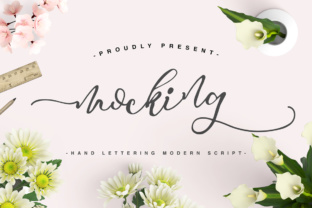
Mocking: A Flirty, Elegant Calligraphy Script for Every Design Need
Mocking is more than just a font—it's a style that adds a touch of romance and sophistication to any project. With its decorative characters and bouncing baseline, it brings a playful yet refined energy to designs that need a little extra flair. Whether you're working on a logo, a business card, or a quote, Mocking can elevate your work with its unique charm.
When to Use Mocking: Real-World Scenarios
Imagine you're designing a wedding invitation. The goal is to create something that feels personal and elegant. Mocking can help you achieve that by adding a soft, handwritten feel that still looks polished. It's perfect for messages that need to feel heartfelt and authentic.
Or maybe you're a small business owner looking to rebrand. You want a logo that stands out but doesn't feel too flashy. Mocking could be the answer. Its balance of creativity and structure makes it ideal for businesses that want to convey both style and professionalism.
Even in digital spaces, Mocking has its place. Think about a social media post for a boutique or a lifestyle blog. Using this script can make your content feel more engaging and visually appealing, helping you connect with your audience on a deeper level.
Why Mocking Works: Practical Benefits
One of the biggest advantages of Mocking is its versatility. It can adapt to different contexts without losing its identity. For example, a designer might use it for a logo, while a marketer could use it for a campaign headline. Both scenarios benefit from the font's ability to convey emotion and personality.
Another reason people choose Mocking is its visual appeal. The decorative elements add depth and interest, making it ideal for projects where aesthetics matter. Whether you're creating a poster, a book cover, or a website header, Mocking can help you stand out from the crowd.
It also works well when paired with other fonts. For instance, using Mocking for a title and a simpler font for body text creates a balanced look that's easy to read but still stylish. This flexibility makes it a valuable tool for designers who want to maintain consistency across different design elements.
Who Can Benefit from Mocking: Different Uses Across Industries
Entrepreneurs often turn to Mocking when they want to build a brand that feels personal. A coffee shop owner might use it for signage to create a warm, inviting atmosphere. Similarly, a fashion brand could use it for packaging to give their products a more luxurious feel.
Bloggers and content creators also find value in Mocking. It can be used for headlines, captions, or even social media banners. The font helps draw attention and adds a unique visual element that sets their content apart from others.
In education, teachers might use Mocking for classroom materials or presentations. It can make lesson plans or handouts feel more creative and engaging, especially when teaching subjects like literature or art. Students might also appreciate the aesthetic when working on projects that require a personal touch.
Considerations Before Using Mocking
Before diving into a project with Mocking, it's important to think about the context. Is the font appropriate for the message you're trying to convey? While it's great for romantic or artistic themes, it may not be the best choice for formal or corporate settings.
Also, consider readability. Although Mocking is beautiful, some of its decorative elements might make it harder to read at smaller sizes. If you're using it for body text, test it on different devices and screen sizes to ensure it remains legible.
Finally, make sure you have the right license if you're using Mocking commercially. Some fonts come with restrictions on how they can be used, so it's always a good idea to check the terms before incorporating them into your work.
Mocking in Action: Examples from Different Fields
A local bakery might use Mocking for their menu board to create a cozy, homemade vibe. The font adds a sense of warmth that matches the quality of their pastries. On the other hand, a tech startup could use it sparingly in their branding to add a human touch without compromising professionalism.
Event planners often use Mocking for invitations and signage. It helps set the tone for the event, whether it's a casual gathering or a formal gala. The font's elegance makes it suitable for a wide range of occasions.
Even in personal projects, like a handmade greeting card, Mocking can make a big difference. It adds a personal, thoughtful feel that makes the recipient feel special.
Final Thoughts: Making the Most of Mocking
Mocking isn't just a font—it's a tool that can enhance your creative work in meaningful ways. By understanding when and how to use it, you can unlock its full potential. Whether you're a designer, a business owner, or someone with a passion for aesthetics, Mocking offers a way to express yourself with style and grace.
As you explore its possibilities, remember that the key to success lies in balance. Pair it with other elements thoughtfully, keep readability in mind, and let your creativity guide you. With the right approach, Mocking can become a powerful asset in your design toolkit.